If you run a business today, you’ve probably asked this question at least once:
Do I really need a website, or is social media enough?
It’s a fair question. Social platforms are everywhere. You can create a page in minutes, start posting, and instantly reach people.
But here’s something I’ve noticed after working with many small businesses and startups: the companies that grow consistently almost always have a website alongside social media.
Social media can bring attention.
A website builds trust, authority, and long-term growth.
Let’s break it down in a practical way so you can decide what actually works best for your business.
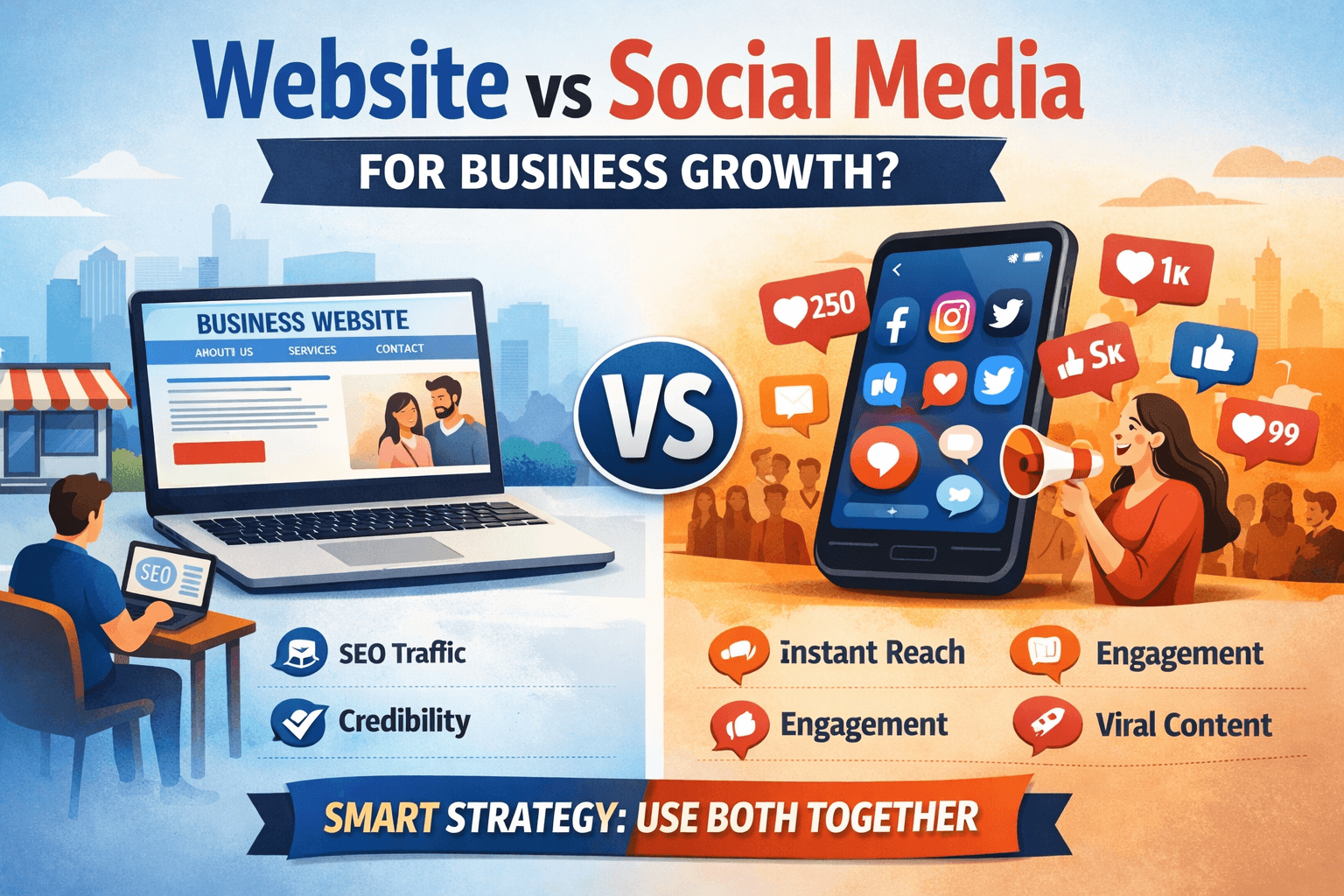
Website vs Social Media – Quick Answer
A website is better for long-term business growth because it builds trust, improves search engine visibility, and converts visitors into customers.
Social media is powerful for reach and engagement, but businesses don’t fully control these platforms.
The best strategy is to use social media to attract attention and a website to convert visitors into customers.
The Core Difference Between a Website and Social Media
Before comparing them, it helps to understand their fundamental roles.
Social Media is a distribution channel.
It helps you reach people, start conversations, and create visibility.
A Website is your digital headquarters.
It’s where people go when they want to understand your business seriously.
Think about it like this:
- Social media = marketing street
- Website = your actual store
Both matter. But they serve different purposes.
Why Social Media Feels So Powerful for Business
There’s a reason so many businesses rely heavily on social media.
It’s fast. It’s free to start. And it can create immediate engagement.
Key Advantages of Social Media
- Instant Audience Access : Platforms already have millions of users. You don’t need to build traffic from scratch.
- Direct Interaction : Comments, messages, and live sessions allow you to talk with customers in real time.
- Content Virality : A single post can reach thousands or even millions if it resonates.
- Brand Personality : Social media helps show the human side of your business through stories, behind-the-scenes content, and casual updates.
But There’s a Catch
You don’t control the platform.
Algorithms change. Reach drops. Accounts sometimes get restricted.
I’ve seen businesses lose 80% of their traffic overnight simply because a platform changed how posts appear in the feed.
That’s the risk of building entirely on rented land.
Why a Website Is Still the Backbone of Business Growth
A website may not feel as exciting as social media at first. But it’s where real business infrastructure lives.
Key Benefits of Having a Website
1. Full Ownership : Your website belongs to you. No algorithm can hide it.
2. Higher Trust : When customers search for your brand and see a professional website, credibility instantly increases.
3. Better Conversions
Websites allow structured information:
- Services
- Pricing
- Testimonials
- Case studies
- Contact forms
All these elements guide visitors toward becoming customers.
4. Search Engine Traffic
With good SEO, your website can attract visitors 24/7 from search engines.
This type of traffic often converts better than social media visitors.
Website vs Social Media: A Quick Comparison
| Feature | Website | Social Media |
|---|---|---|
| Ownership | Fully owned | Platform controlled |
| Long-term traffic | Yes (SEO) | Limited |
| Trust factor | Very high | Moderate |
| Customer interaction | Limited | Very strong |
| Content lifespan | Long | Short |
The takeaway?
Social media drives attention. Websites convert attention into business.
The Smart Strategy: Use Both Together
The real growth happens when businesses combine both tools effectively.
Here’s the model that works well for most businesses.
Step 1: Use Social Media to Attract Attention
Post content that educates, entertains, or solves problems.
Examples:
- Quick tips
- Behind-the-scenes content
- Customer success stories
- Short educational videos
Step 2: Direct Traffic to Your Website
Every post should gently guide users to something deeper:
- A blog article
- A product page
- A service page
- A contact form
This is where the real conversion happens.
Step 3: Capture Leads
A website allows you to collect:
- Email subscribers
- Contact inquiries
- Consultation bookings
Social media alone cannot do this effectively.
Real Example from Small Businesses
I’ve seen many local businesses rely completely on social media.
At first, it works. They get likes, comments, maybe a few orders.
But growth eventually slows down.
When they launch a website with:
- Proper SEO
- Clear service pages
- Customer testimonials
Something interesting happens.
People who discover them on social media visit the website before buying.
That extra step often makes the difference between curiosity and trust.
Pro Tip: Your Website Should Do More Than Just Exist
Many businesses build a website and forget about it.
That’s a missed opportunity.
A strong website should include:
- Helpful blog content
- Customer reviews
- Clear product or service pages
- Fast loading speed
- Mobile-friendly design
This turns the website into a marketing engine, not just a digital brochure.
Did You Know?
Studies show that over 75% of people judge a business’s credibility based on its website design.
Even if customers find you on social media, they often search your brand name on Google before making a decision.
And if they don’t find a proper website?
They may move on to a competitor.
When Social Media Alone Might Be Enough
There are a few situations where businesses survive mainly on social media:
- Influencers or personal brands
- Very small local services
- Businesses selling through messaging apps
But even in these cases, having a website usually multiplies growth opportunities.
Final Thoughts
So, website vs social media what is better for business growth?
The honest answer is this:
You shouldn’t choose one over the other.
Social media helps people discover you.
A website helps them trust you and buy from you.
Businesses that combine both tend to grow faster, attract better customers, and build long-term credibility.
If you’re serious about scaling your business online, start thinking of your website as the foundation—and social media as the amplifier.
FAQs
1. Is a website necessary if I already have social media pages?
Yes. Social media helps with visibility, but a website provides credibility, structured information, and better conversion opportunities.
2. Which is better for small businesses: website or social media?
Small businesses benefit from both. Social media brings traffic, while a website helps turn that traffic into leads and customers.
3. Can a website bring customers without social media?
Yes, especially through search engine optimization (SEO). Many businesses receive consistent traffic from Google searches alone.
4. How does a website improve business credibility?
A professional website shows that your business is established, trustworthy, and serious about serving customers.
5. Should startups build a website first or social media?
Ideally both together. But if you must prioritize, start with a simple website and use social media to drive traffic to it.