Search web development across India and quotes land all over the map inside single afternoons: flashy glossy sales decks promise multi-million rupee enterprise miracles over six-week retreats, budget marketplaces pitch five-page sites for pocket change using cracked commercial plugins, and slick mid-sized agencies pass your brief straight from charismatic pre-sales callers down to inexperienced junior trainees whom you never get permission to speak with directly. Choosing thoughtfully upfront spares business owners months of stalled timelines, vanished source passwords, and broken lead capture forms.
Evaluating web partners does not require knowing computer code yourself; ten grounded practical due-diligence questions separate dependable technical builders sharply from fast-talking middlemen before signing a single rupee advance.
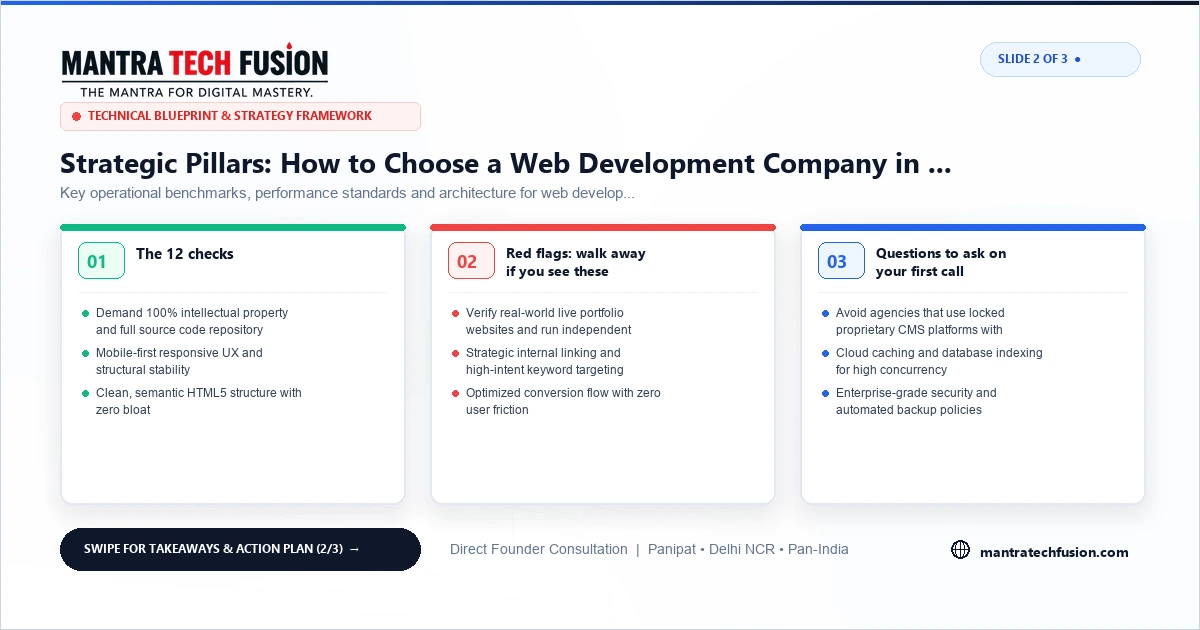
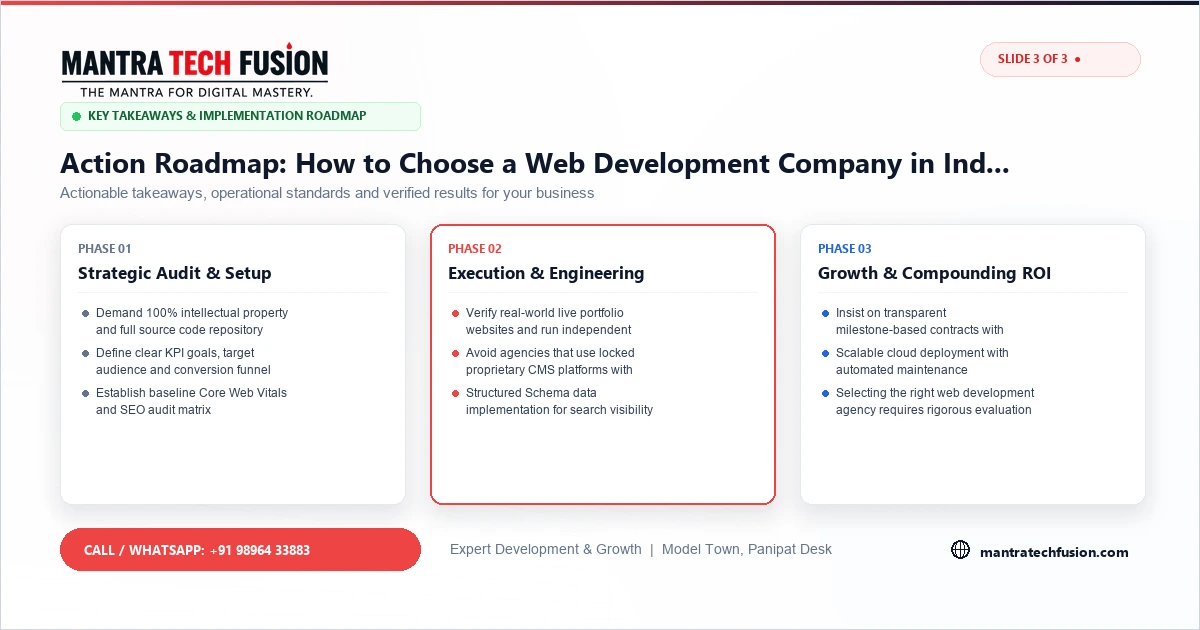
1. Ask Directly Who Registers Domain Names and Hosting Accounts
Before glancing at visual demo themes, settle asset ownership in clear black-and-white contract terms. Reputable developers insist that you create and pay registrar and hosting accounts directly beneath your own corporate email (giving the developer safe delegated collaborator access solely to upload files and manage PHP settings). Walk rapidly away from any firm bundling "free domain under our partner panel" while refusing direct registrar logins; recovering trapped domains later disrupts corporate GST emails severely.
2. Inspect Actual Live Portfolio URLs Directly on Cheap Mobile Data
Agency PDF pitch decks display shiny Photoshop mockup images looking gorgeous on conference monitors while hiding awful sluggish real-world performance underneath:
- Ask for three genuine clickable client URLs built over the past twelve months (never accept purely screenshot image sliders).
- Open those actual websites straight on an ordinary Android smartphone over standard 4G mobile data. Do navigation buttons shift erratically mid-scroll? Do specification tables wrap inside tight clean frames without horizontal page wobbling?
- Notice subtle developer honesty too: if an agency displays real client domains clearly backed by authentic street addresses (such as our Nagpal Engineering & Sports case study or Ekami Perfumes custom store), credibility shows plainly; beware vague portfolios packed solely with anonymous broken links or unconfirmed multinational brand logos.
3. Verify Complete Source Code Ownership Without Encrypted Runtime Locks
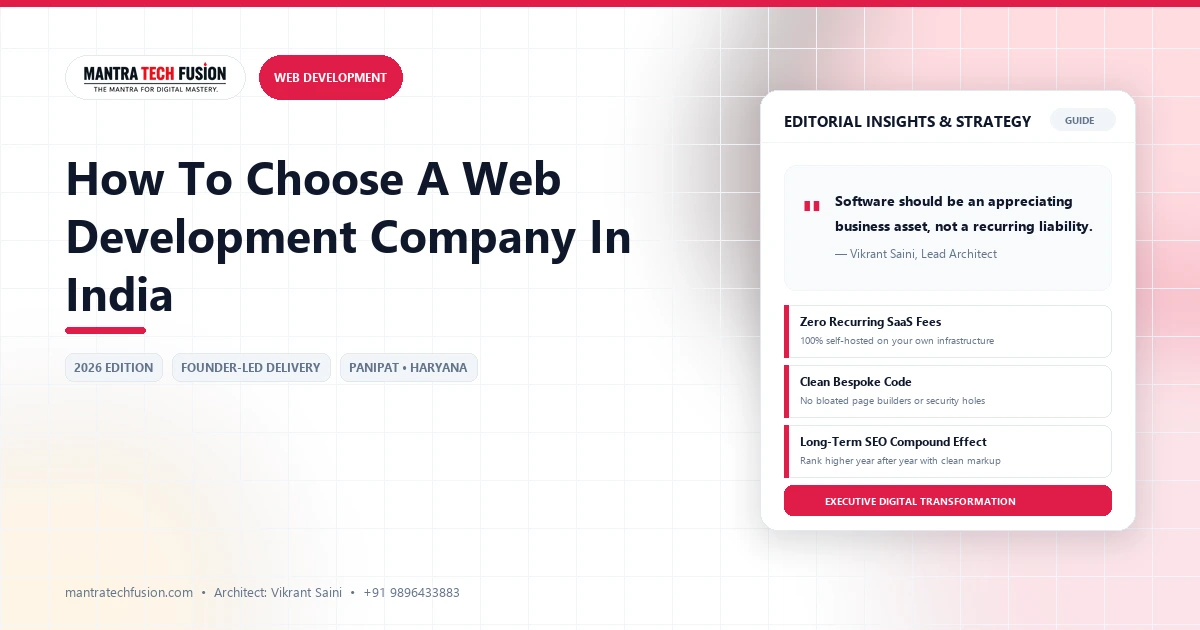
Clarify explicitly what arrives inside your Google Drive folder when final settlement clears. Genuine open development delivers readable.html,.css,.js, and modular.php templates alongside clean SQL database backups runnable on standard Linux hosts like Hostinger or AWS. Avoid vague promises wrapped around proprietary monthly rented website builders or ionCube-encrypted plugins that break the hour you stop paying monthly developer renewals. Also confirm clearly that complete server administration documentation comes written simply for normal corporate staff transitions.
4. Demand Transparent Written Scope Separating Standard Pages From Custom Apps
Honest studios know upfront which standard deliverables carry fixed rates and where genuine custom programming demands itemized estimating. For example, at Mantra Tech Fusion our published rates lock static sites at ₹20,000 + 18% GST (7 to 14 days), dynamic database sites at ₹35,000 + 18% GST (2 to 3 weeks), and direct online stores from ₹62,999 + 18% GST for an online store (₹75,999 + 18% GST Shopify), while mobile apps or complex B2B workflow software always quote strictly against complete written screen checklists rather than guessing blind flat stickers upfront. Beware vendors refusing to clarify exact included page counts, exclusion rules, or GST taxation lines in writing.
5. Check Direct Communication Access to the Person Writing Code
In larger sales-heavy shops, polished account managers nod cheerfully to everything over calls before misinterpreting critical factory nuances when forwarding scribbled tickets to remote back-office desks. Confirm clearly who designs layouts and configures backend forms directly; working directly with a founder-led development studio regularly delivers noticeably sharper iteration clarity (inspect our custom web development workflow for how clean founder communication runs).
6. Test Their Contact Form Rigor (Ask About SMTP & Database Logging)
Most small business owners spot broken web enquiry forms six months too late because agencies lazily plugged default server php mail() wrappers that fail Gmail SPF/DKIM authentication silently. Ask technical candidates plainly: "How do you prevent inquiry emails landing inside spam folders, and do dynamic builds also keep backup enquiry logs inside MySQL databases?" Competent backend developers answer immediately using authenticated SMTP relays, SPF/DKIM alignment, and parameterized PDO database persistence (rejecting SQL injection risks).
7. Verify Honest SEO Hygiene vs. Empty Automated Spam Promises
Every modern website influences search visibility directly through underlying markup clarity:
- Does the developer write unique page titles, concise meta descriptions, single
<h1>hierarchies, clean canonical links, compressed WebP imagery, and accurateOrganization / LocalBusinessJSON-LD Schema out of the box? - Run briskly past pitches bundling "Free Auto-Generated 500 City Landing Pages Included." Google's Search Essentials actively suppress repetitive doorway clones and unoriginal scaled padding today; honest structural clarity wins steadily over automated spam shortcuts.
8. Clarify Exact Staging Previews & Payment Milestone Triggers
Never hand over large lump-sum settlements completely blind upfront without intermediate checkpoint views. Healthy milestone workflows split sensibly: initial kickoff planning payment, staging visual wireframe sign-off visible inside private test links directly on your phone browser, functional staging form & backend testing, and final payment tied alongside full registrar check plus zipped source backup delivery.
9. Check Written Post-Launch Bug Support & Maintenance Boundaries
Ask plainly what happens three weeks after launch if an unexpected Safari rendering glitch surfaces versus deciding six months later you wish adding full multilingual translation modules. Clear teams state sensible bug-fix grace windows clearly upfront while isolating future optional feature expansion or ongoing upkeep transparently (like clean distinction covered across our package standards).
10. Read Candidate Copywriting Honestly (Look for Fake Stats or Buzzwords)
Finally, read the web development studio's very own website. If the vendor's homepage relies heavily on empty hype adjectives, unverifiable rating claims, or obvious copy-pasted boilerplate paragraphs across dozens of towns, expect identical sloppy habits getting pasted hastily onto your company domain too. Calm, plain-spoken factual clarity on their own site reflects exactly what engineering craftsmanship arrives inside yours.
Open your candidate's website or listed client pages inside Chrome Developer Tools (F12 Network & Inspect tabs) checking CSS filenames, asset payload sizes, and page speed diagnostics; bloated multi-theme wrappers usually load heavy dozens-deep nested <div> containers plus outdated bundled third-party extension libraries instantly visible under source view.