Search engine technology has shifted fundamentally from presenting a simple list of ten blue links toward delivering direct answers through automated summaries and conversational interfaces. Search engines now evaluate document structure, factual accuracy, and semantic data to answer user queries right on the results page. For commercial enterprises, manufacturers, and service companies, this transformation requires rethinking traditional search optimization tactics.
How Retrieval and Generative Summaries Function
Traditional search engines matched user search strings against index keywords, ranking pages primarily through keyword density and backlink counts. Modern generative search systems function differently. When a prospective client types a query, automated language models scan indexed documents, extract factual claims, and assemble a direct summary.
These models seek authoritative statements supported by clear context. Pages filled with superficial filler or repetitive keyword stuffing are routinely bypassed. To be cited as an authoritative source in search engine summaries, a company website must present clear factual data, direct definitions, and logical section hierarchies.
The Critical Role of Structured Data and Semantic Schema
Machine-learning crawlers rely heavily on Schema.org structured data to understand the entities described on a webpage. When search algorithms evaluate a business website, structured data acts as an explicit translation layer that confirms essential details.
- Entity Disambiguation: Using Organization and LocalBusiness schemas helps search systems distinguish your enterprise, physical address, and service footprint from other entities with similar names.
- Product and Service Attributes: Marking up product specifications, dimensions, materials, and categories enables search engines to accurately index industrial catalogs.
- Question and Answer Organization: Structuring common buyer inquiries with FAQPage markup allows language models to extract concise paragraphs for direct informational answers.
Prioritizing Technical Performance and Crawl Accessibility
Generative systems prioritize fast, accessible web documents. Heavy client-side JavaScript rendering often slows down crawler parsing. When search bots encounter complex client-side rendering trees, indexing delays occur.
- Server-Side Rendered HTML: Serving plain, lightweight HTML5 ensures search engine bots can parse your content immediately upon the initial HTTP request.
- Fast Server Response Times: Utilizing optimized server environments, lightweight CSS, and native browser functionality reduces page loading latency.
- Clean Document Hierarchy: Using a single H1 tag for the primary topic, followed by logical H2 and H3 subsections, assists automated parsers in navigating technical material.
Shifting from Keyword Repetition to Information Depth
Old search strategies often relied on creating dozens of thin pages targeting minor keyword variations. In generative search environments, this approach leads to search cannibalization and indexing penalties. Algorithms reward high-information gain, which refers to content that provides unique technical facts, precise specifications, or distinct procedural steps not found on standard competitor sites.
For instance, an equipment fabricator that documents real manufacturing steps, steel grades, testing procedures, and dimensional limits will gain greater search visibility than a competitor using generic promotional phrases. Writing clear, factual prose aimed at resolving real buyer questions remains the most durable optimization strategy.
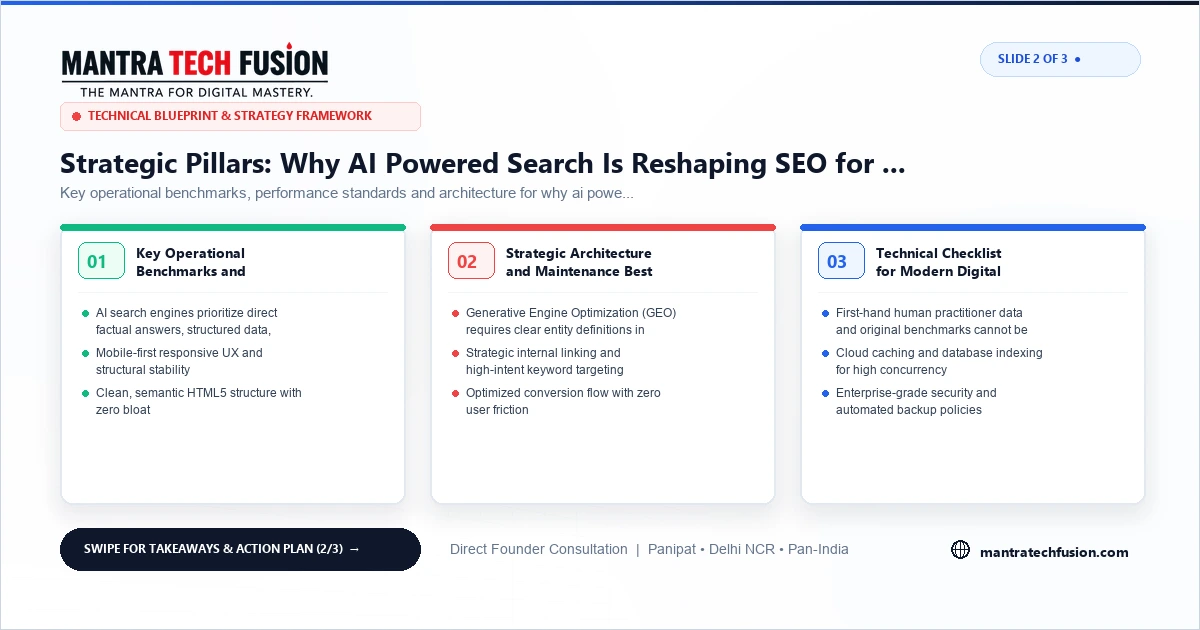
This article in three pictures

Practical Steps for Business Websites
To maintain steady visibility as search technologies evolve, business owners should focus on solid engineering fundamentals:
- Ensure all key business information, services, and product catalogs are accessible in static or server-rendered HTML.
- Implement connected Schema.org structured data without orphaned markup nodes.
- Remove vague promotional claims and replace them with concrete technical specifications, dimensional ranges, and operating parameters.
- Optimize mobile page delivery to ensure core text renders without render-blocking script delays.