Many companies approach search engine optimization as an afterthought, attempting to optimize text and acquire backlinks only after a website has been designed and launched. This retroactive approach frequently encounters severe technical obstacles, such as unindexable navigation, poor URL hierarchies, and sluggish server response times. Incorporating SEO principles directly into the web development phase creates a stable technical foundation that drives sustainable long-term growth.
Technical SEO Built into the Core Architecture
Search engine bots crawl the web using automated programs that parse raw code. When a website is built with clean architectural foundations, search crawlers can index every product and service page without friction.
- Semantic HTML5 Markup: Using semantic tags like header, nav, main, section, article, and footer helps search engines understand the structural role of each content block.
- Correct Heading Hierarchy: Structuring pages with a single H1 tag for the primary topic, followed by logically nested H2 and H3 subheadings, provides a clear outline of page content.
- Clean Canonical URLs: Enforcing consistent URL structures (such as standard trailing slashes and HTTPS protocols) prevents duplicate content indexation issues.
- Automated XML Sitemaps: Maintaining dynamically updated XML sitemaps ensures that newly published catalog models and articles are promptly discovered by search algorithms.
Speed as a Core Search Ranking and Conversion Factor
Page rendering speed represents a confirmed search ranking signal and a major factor in user conversion. Slow websites suffer from high bounce rates, as prospective customers abandon pages that fail to load promptly.
- Optimized Server-Side Processing: Developing backend logic in lightweight PHP 8.2 and executing efficient database queries keeps server response times low.
- Resource Concatenation and Minification: Serving compact CSS and JavaScript files reduces the number of HTTP requests required to render each page.
- Responsive Media Delivery: Serving appropriately scaled images prevents mobile devices from downloading oversized desktop assets.
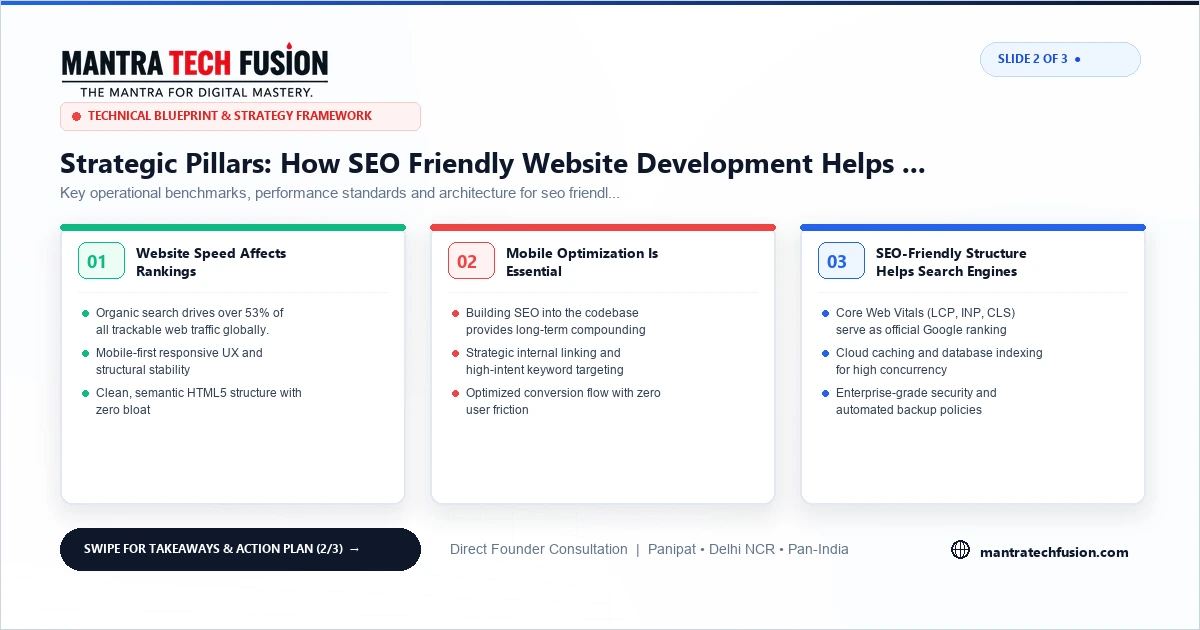
Search structure and Internal Link Distribution
An effective web structure does more than present information; it distributes search authority logically throughout the site. In a well-structured catalog, primary category pages pass authority down to specific product models through intuitive internal links and breadcrumb trails.
This logical structure signals to search engines which pages hold the highest commercial importance. By creating clear pathways between related services and technical case studies, prospective buyers can easily explore your capabilities while search bots crawl your entire site efficiently.
Preventing Search Debt and Costly Rework
Launching a website built on heavy, unoptimized code often leads to technical debt. Fixing fundamental architectural flaws later, such as moving from hash-based routing to crawlable server URLs or reorganizing database taxonomies, requires extensive and costly refactoring.
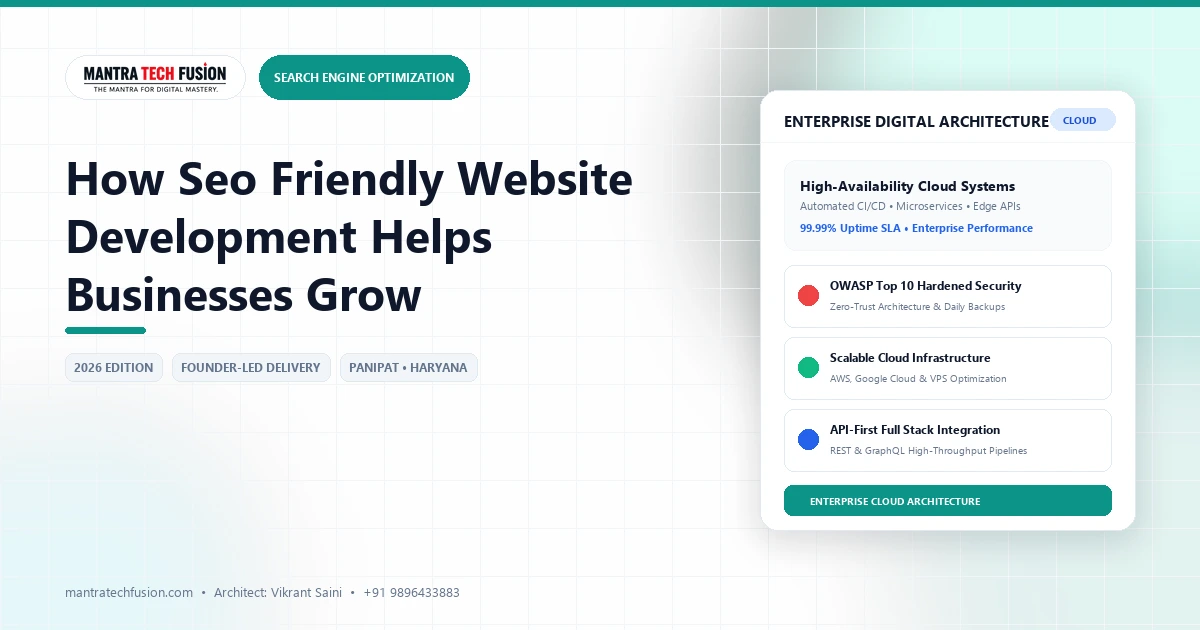
By addressing crawlability, mobile responsiveness, structured data, and performance during the initial development cycle, businesses avoid expensive rebuilds. The site begins accumulating search equity and organic impressions from the day it goes live.
This article in three pictures

Tangible Commercial Advantages for Growing Companies
Investing in technical web development yields measurable commercial benefits over time:
- Lower Customer Acquisition Costs: Organic search rankings generate ongoing qualified traffic without requiring continuous pay-per-click ad expenditures.
- Higher Commercial Inquiry Quality: Visitors who find your business through specific, long-tail technical queries typically arrive with clear purchasing intent.
- Long-Term Brand Authority: Consistently ranking for core service and product terms establishes your company as a reliable leader within your industrial or regional market.