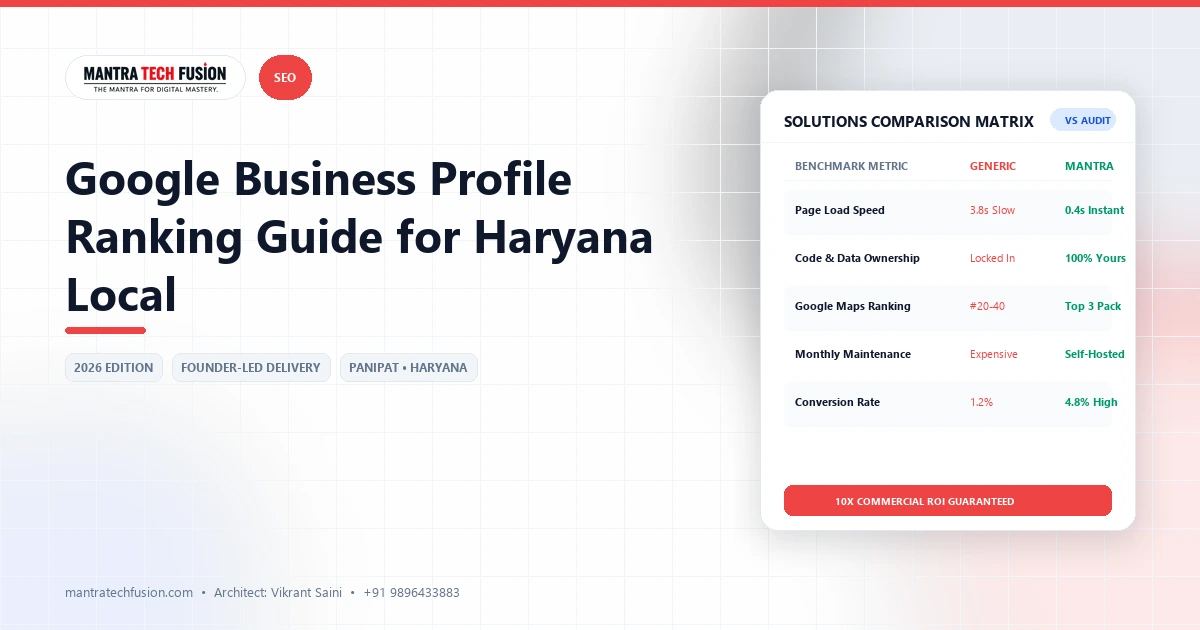
When evaluating google business profile ranking guide, For small and medium enterprises operating across Haryana - including retail showrooms, healthcare clinics, manufacturing mills, coaching institutions, auto workshops, and professional services - local search on Google Maps and Google Search local packs represents one of the highest-intent customer acquisition channels available. When a potential customer in Panipat, Karnal, Sonipat, Ambala, Rohtak, Hisar, or Gurugram searches for a product or service using queries such as "CA near me", "industrial valve manufacturer", or "best diagnostic centre", the 3-Pack map module routinely captures the majority of immediate telephone inquiries and navigational directions.
Google Business Profile (formerly Google My Business) is a free tool provided by Google, yet a substantial proportion of business profiles across Haryana remain either unverified, miscategorized, or optimized based on outdated internet folklore. This comprehensive guide details the exact, documented ranking framework established by Google, along with operational steps required to build and maintain high local visibility across Haryana districts.
Strategic Overview: Google Business Profile Ranking Guide and Industry Best Practices
According to official Google Business Profile documentation, local search results are determined primarily by three fundamental factors: Relevance, Distance, and Prominence. Understanding how these three mechanisms interact is essential for sustainable local visibility:
- 1. Relevance: Relevance refers to how well a local Business Profile matches what a user is searching for. If a customer searches for "plywood wholesale dealer" and your primary category is set to generic "Corporate Office", Google will not consider your profile relevant. You establish relevance through accurate category selection, detailed service catalogs, precise business descriptions, and consistent attributes.
- 2. Distance: Distance calculates how far each potential search result is from the location term used in a search, or from the user’s physical device location if no geographic modifier is specified. Distance is an algorithmic constraint determined by the user's physical proximity. A business cannot artificially manipulate distance, which is why optimizing relevance and prominence is critical.
- 3. Prominence: Prominence refers to how well known a business is in both the physical world and the digital ecosystem. Prominence is calculated based on information that Google collects about a business across the web: organic search engine rankings, directory citations, articles, local news mentions, customer review volume, review sentiment, and steady review velocity.
Debunking Local SEO Myths: Geo-Tagged Photos Do Not Boost Rankings
A widespread myth frequently repeated in Indian local SEO forums claims that embedding GPS coordinates (EXIF metadata) into JPEG photos prior to uploading them to Google Business Profile will manipulate Google's perception of your location and elevate your rankings across surrounding towns.
This claim is entirely incorrect. Google strips all EXIF metadata upon image upload for user privacy and security reasons. Google's documentation contains zero reference to image metadata influencing local algorithms. What actually influences prominence is uploading genuine, high-quality photographs of your physical storefront, signboard, reception area, production floor, and team. Fresh, authentic imagery signals to Google that the business is operational and verifiable, encouraging higher user engagement and click-through rates.
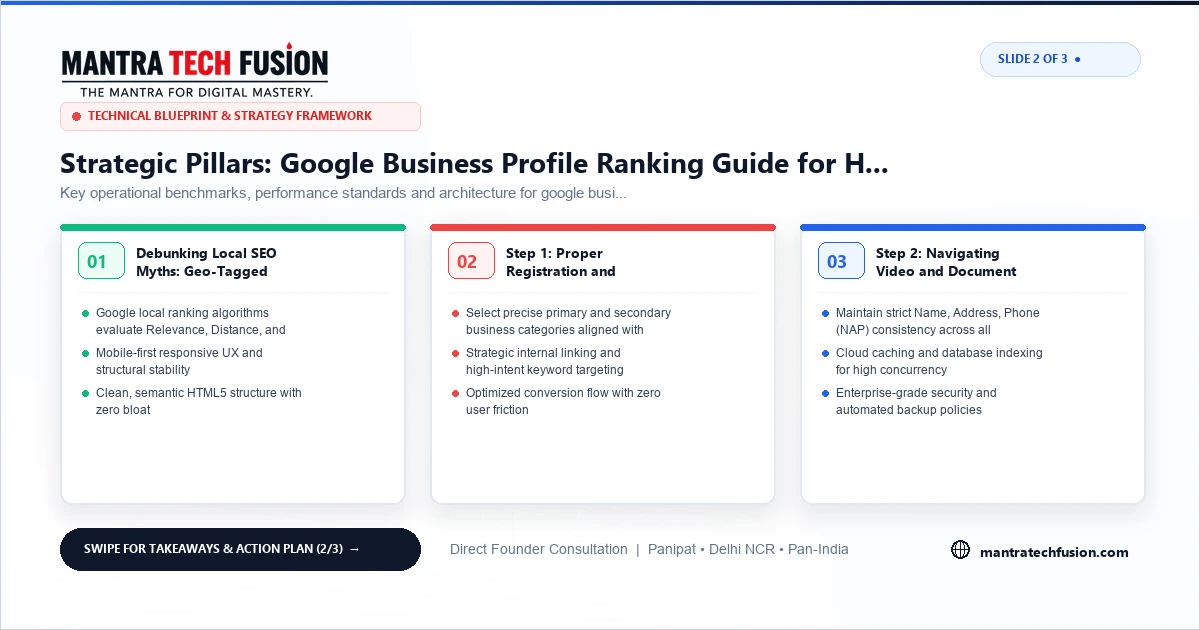
Step 1: Proper Registration and Business Profile Setup
To establish your profile correctly on Google Business Profile:
- Official Business Name: Use your exact, real-world business name as displayed on your physical signage, tax registrations, and GST documents. Do not stuff keywords into your title (e.g., naming your business "Sharma Textiles Best Bed Sheet Manufacturer Panipat GT Road"). Google’s automated spam filters frequently issue hard suspensions for deceptive naming practices.
- Primary Category Selection: Your primary category is one of the strongest relevance signals in local search. Choose the most specific category available (e.g., "Textile Mill", "Rice Mill", "Chartered Accountant", "Pediatrician"). Secondary categories should be added only for distinct, genuinely offered services.
- Service Area vs. Physical Storefront: If customers visit your premises (such as a shop, clinic, or mill office), specify your complete physical address with precise map pin positioning. If you operate exclusively as a mobile service without customer visits, configure your listing as a Service Area Business (SAB) and hide your residential address per Google guidelines.
- Complete Operating Hours: Define accurate regular hours. During major regional festivals (such as Diwali or Holi), configure Special Hours in advance to prevent customers from arriving at closed premises.
Step 2: Navigating Video and Document Verification in India
Over recent years, Google has significantly tightened verification workflows across India to curb duplicate and fraudulent business listings. The historical postcard verification method has largely been replaced by automated video verification and official documentation reviews:
- Live Video Verification: When prompted for video verification, prepare a continuous, unedited video recording capturing three critical elements:
- Physical Location Context: Show your exterior street name, neighboring landmarks, and permanent exterior building signage.
- Business Signage & Facilities: Walk inside and show your interior branding, reception counter, work desks, or manufacturing equipment.
- Proof of Management Access: Film yourself unlocking the front door with physical keys, opening employee-only areas, or accessing point-of-sale / administrative systems.
- Documentary Validation: In cases of manual review or suspension reinstatement, maintain clear scanned copies of your GST registration certificate, electricity/utility bills in the business name, municipal trade license, and photos of permanent street-facing signage.
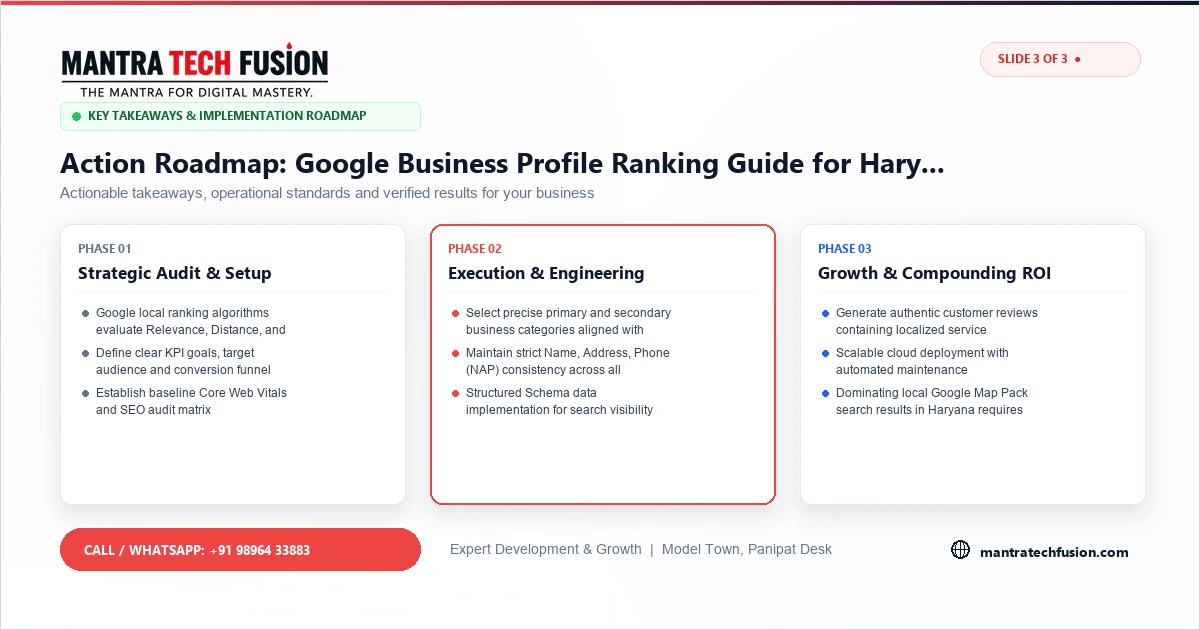
Interactive 3-Slide Article Visual Guide
Step 3: Managing Reviews Ethically Under Google Policies
Customer reviews represent a core pillar of prominence and consumer trust. However, review acquisition must strictly comply with Google's Prohibited and Restricted Content policies:
- Never Incentivize or Purchase Reviews: Offering discounts, gifts, cash, or free services in exchange for positive Google reviews violates Google guidelines and can trigger public consumer warning badges or profile deletion.
- Establish a Systematic In-Person Review Workflow: Generate your official short review link from your GBP dashboard. Train frontline staff to share this link via WhatsApp or email immediately following a successful customer interaction.
- Review Velocity Matters: A natural, consistent cadence of 3–5 authentic reviews per month is far more beneficial than receiving 40 reviews in a single weekend followed by months of inactivity.
- Respond Professionally to All Feedback: Reply to every review within 24 to 48 hours. When addressing critical feedback, remain objective, acknowledge the customer's perspective without arguing, and offer an offline resolution channel via phone or email. Future prospective clients judge your business by how gracefully you resolve complaints.
Step 4: Ensuring Name, Address, and Phone (NAP) Consistency
Google cross-references business information across third-party web directories, state corporate registries, industry portals, and social platforms to validate business prominence. If your registered phone number or address differs across platforms, Google's algorithmic confidence diminishes:
- Standardize your address format across your website, Google Business Profile, IndiaMART, Justdial, and social media channels.
- Ensure your official phone numbers match your published website contact information exactly.
- Embed your verified Google Maps location on your website's contact page using standard Google Maps iframe embed code.
Step 5: Ongoing Profile Maintenance and Engagement
A Google Business Profile requires ongoing operational attention rather than a one-time setup:
- Google Updates (Posts): Publish periodic updates regarding new product lines, company announcements, or operating hour updates once every two weeks.
- Q&A Module Management: Frequently asked customer questions can be pre-populated and answered directly by the business owner on the public profile, clarifying common operational questions before clients call.
- Messaging and Call History: If GBP messaging is activated, ensure incoming inquiries receive prompt replies. Response rates impact profile health.
Summary Checklist for Haryana Business Owners
- Claim and complete 100% of profile attributes on google.com/business.
- Use exact legal entity naming without keyword stuffing.
- Select the most granular primary category representing your core revenue generator.
- Execute clean video verification showing street context, signage, and key access.
- Maintain absolute NAP consistency between your profile and website.
- Implement an authentic, non-incentivized customer review collection routine.
- Avoid disproven tactics such as photo geo-tagging or fake review syndicates.
When managed methodically, your Google Business Profile acts as an authoritative digital storefront that consistently captures local high-intent commercial demand across your target district.
To learn how local map optimization connects with comprehensive search strategy, explore our SEO services and review our local operational presence on our Haryana web design and SEO hub. For cost expectations across digital web infrastructure, review our guide on website design cost in Panipat & Haryana.