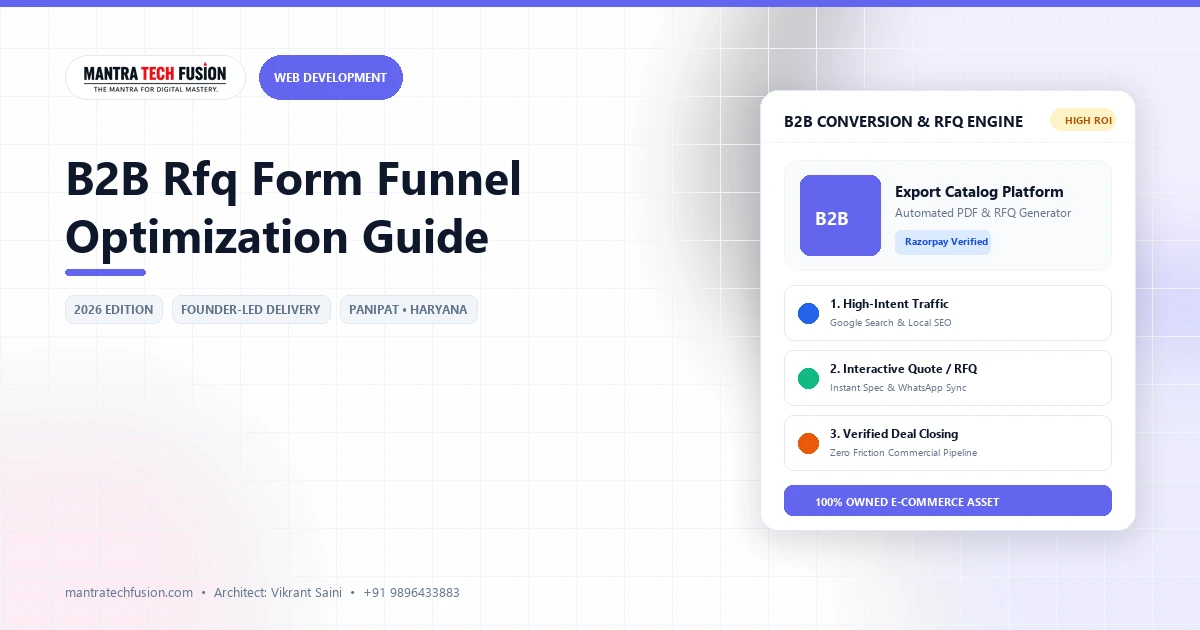
When evaluating b2b rfq form funnel, In consumer e-commerce, the conversion goal is simple: drive the visitor to click an "Add to Cart" button and enter credit card details within seconds. In B2B manufacturing, engineering, and wholesale trade, that model completely breaks down. Procurement officers, plant managers, and export sourcing directors do not buy precision CNC components, laboratory apparatus, custom textiles, or industrial packaging via automated retail checkouts.
Instead, commercial transactions depend on the Request for Quote (RFQ). Yet across hundreds of industrial websites, the RFQ mechanism consists either of an outdated generic "Contact Us" form with three blank fields, or an overwhelming 25-field single-page form that prospective buyers abandon immediately. Below is an engineering and user-experience guide to designing, structuring, and optimizing a high-converting B2B RFQ funnel.
Strategic Overview: B2B Rfq Form Funnel and Industry Best Practices
Understanding why enterprise buyers require an RFQ rather than a retail cart is essential for designing the digital experience:
- Variable Cost Drivers: Unit costs depend heavily on batch quantity, raw material alloy grades, plating finishes, and customized dimensional tolerances.
- Logistical Dependencies: Shipping costs for container loads or palletized freight fluctuate based on target destination ports, customs duties, and agreed Incoterms (FOB, CIF, Ex-Factory).
- Multi-Stakeholder Sign-Off: Procurement officers require formal proforma quotes and technical datasheets to secure purchase committee approvals, budgetary grants, or corporate letters of credit.
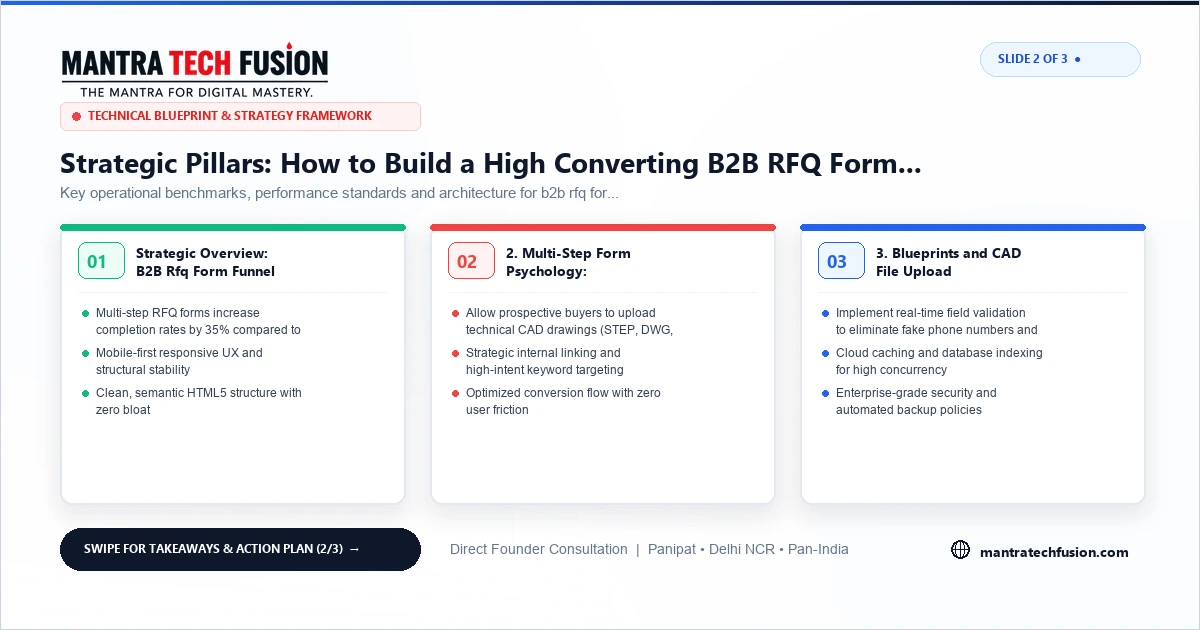
2. Multi-Step Form Psychology: Progressive Information Architecture
Presenting a single monolithic page with fifteen form inputs triggers cognitive fatigue and high abandonment. Transforming that form into a clean, multi-step progressive funnel systematically improves completion rates:
- Step 1 - Product & Technical Specifications: Focus entirely on the buyer's requirement. What product family do they need? What material grade, dimensions, or technical tolerances are required? Because the buyer is describing their own project, friction is minimal.
- Step 2 - Commercial Volume & Delivery Timeline: Ask for estimated order quantities (with clear unit selectors like pieces, metric tons, or linear meters), target sample timelines, and delivery destination (city, country, or destination port).
- Step 3 - Corporate Identification & Contact: Conclude by asking for the buyer's corporate email (prompting domain-specific emails), company entity name, designation, and WhatsApp/phone number for technical follow-up.
3. Blueprints and CAD File Upload Architecture
For custom engineering and manufacturing suppliers, a quote cannot be calculated without inspecting technical drawings. Missing upload gateways force sales teams into lengthy email exchanges that delay quoting cycles:
- Support Industry-Standard Formats: Ensure your server accepts 2D and 3D engineering files: PDF, STEP, STP, IGES, IGS, DXF, DWG, and high-resolution ZIP archives.
- Strict Security and MIME-Type Validation: Never validate file uploads solely by file extension. Validate server-side MIME types, enforce file size ceilings (typically 25MB to 50MB), and store uploaded drawings outside the public web root in protected directories.
- Non-Disclosure Agreement (NDA) Gateways: Include an optional checkbox or download link: "Require signed mutual NDA before opening drawings", reassuring enterprise aerospace, defense, and proprietary hardware developers that their intellectual property is secure.
4. Automated Lead Qualification and Instant Confirmation
What happens immediately after form submission determines whether a prospective client waits for your response or continues browsing competitor websites:
- Instant Dynamic Confirmation Screen: Display an immediate confirmation with an assigned Inquiry Reference Number, clear explanation of next steps, and realistic quoting timelines (e.g., "Our engineering desk reviews technical drawings within 24 working hours").
- Automated Email & WhatsApp Acknowledgement: Send an immediate branded email confirmation summarizing the submitted parameters, accompanied by your company profile and relevant plant certification proofs.
- Direct WhatsApp Routing for Urgent Inquiries: Include an immediate action trigger on the confirmation screen: "Need an urgent quotation? Share your inquiry reference on WhatsApp with our technical lead."
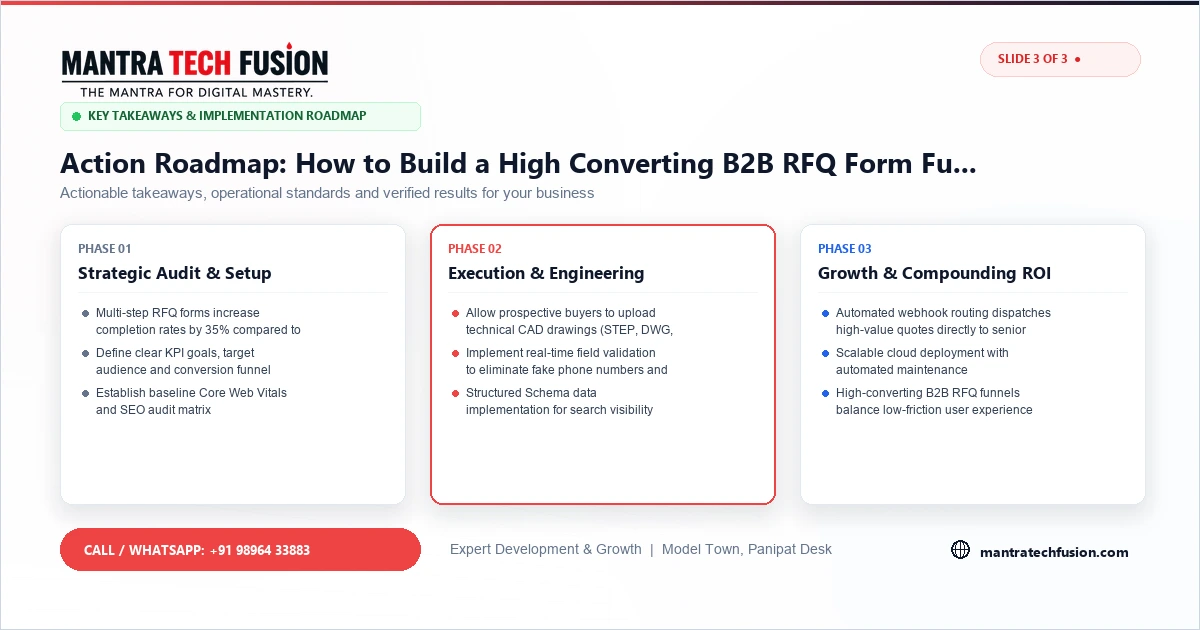
Interactive 3-Slide Article Visual Guide
5. Invisible Anti-Spam Defenses Without User Friction
Industrial RFQ forms are frequent targets for automated spam bots and marketing solicitations. However, subjecting high-value corporate buyers to distorted CAPTCHA image puzzles introduces unnecessary abandonment:
- Honeypot Technique: Include hidden form fields invisible to human users via CSS. Bots automatically populate every form field; any submission with data in the honeypot is silently dropped.
- Time-Threshold Analysis: Track the time elapsed between form rendering and submission. Submissions occurring in under three seconds are flagged as automated scripts.
- Privacy-Preserving Verification: Implement modern cryptographic challenges like Cloudflare Turnstile, which evaluate browser telemetry invisibly without interrupting the user.
6. Webhook Routing and CRM Attribution Workflows
Capturing the technical RFQ on your website is only half the battle; lead velocity determines whether quotes convert into purchase contracts. In many traditional manufacturing setups, quote inquiries languish in an unmonitored shared email inbox for days:
- Asynchronous Webhook Dispatch: Configure your form handler to dispatch an immediate background HTTP POST webhook to your customer relationship management (CRM) platform (such as Zoho CRM, LeadSquared, or HubSpot) or internal ERP system immediately upon validation.
- Preserve Attribution Data: Ensure your form script captures first-touch marketing parameters - including UTM source, campaign medium, referrer domain, and landing page path - into hidden fields without relying on fragile client-side local storage.
- Lead Routing Rules: Route incoming quote requests dynamically based on volume parameters or geographic destination. Domestic requests can trigger SMS/WhatsApp notifications to regional field sales managers, while international inquiries with FOB/CIF terms route directly to the export documentation desk.
When an industrial website treats the RFQ funnel as an engineering tool rather than a generic contact form, it captures richer technical context, accelerates quotation turnaround, and projects professional competence to institutional procurement officers.
To examine conversion-focused design tailored for manufacturing enterprises, explore our custom web design services and see our specialized solutions in web development. For deeper insights into designing effective corporate websites, review our guide on essential features every modern business website needs.