When evaluating payment gateway comparison india, For any Indian commercial website - whether an e-commerce catalog, a SaaS platform, a professional services firm, or an educational institution - the payment gateway represents the crucial conversion bridge between customer interest and realized revenue. In India’s dynamic digital payments ecosystem, businesses are not merely processing credit cards; they must support India’s dominant Unified Payments Interface (UPI), UPI AutoPay, domestic debit cards with tokenization, Net Banking across 50+ banking institutions, and international currencies.
Three of the most prominent payment aggregators serving Indian enterprises are Razorpay, Cashfree Payments, and CCAvenue. Each provider maintains distinct architectural strengths, developer ecosystems, settlement mechanisms, and pricing frameworks. Rather than declaring a single "best" provider, this guide evaluates the technical and operational trade-offs across all three platforms based on verified industry documentation and statutory compliance requirements.
Strategic Overview: Payment Gateway Comparison India and Industry Best Practices
| Feature Area | Razorpay | Cashfree Payments | CCAvenue |
|---|---|---|---|
| Developer Integration | Extensive SDKs, modern REST APIs, comprehensive docs | Clean REST APIs, webhook sandboxes, modular SDKs | Established server-to-server APIs, CMS plugins |
| UPI Stack & AutoPay | UPI Intent, QR, AutoPay with mandate interoperability | Deep UPI stacks, native AutoPay, mandate management | Comprehensive UPI collection & UPI AutoPay support |
| International Currencies | Multi-currency pricing in major global currencies | Global cards and international currency display | Extensive multi-currency engine (27+ currencies) |
| Automated Payouts | RazorpayX banking & automated vendor payouts | Pioneered Cashfree Payouts; rapid bulk disbursement | Standard merchant settlements and payout facilities |
2. Evaluating Key Operational Scenarios
Scenario A: Rapid Deployment & Modern Developer Experience
If your team prioritizes clean developer onboarding, comprehensive API documentation, and pre-built integration modules for standard web frameworks (PHP, Laravel, Node.js, Python, WordPress, Shopify):
- Razorpay is renowned for its polished developer dashboard, sandbox simulation tools, and drop-in modal checkout ("Standard Checkout"), which automatically renders localized payment options based on the user's device and browser.
- Cashfree similarly provides modern API documentation and comprehensive JavaScript SDKs, making it straightforward to build custom-branded checkout interfaces without exposing raw card fields.
Scenario B: Complex Payouts, Vendor Splitting & Marketplace Escrow
For marketplaces, multi-vendor directories, or businesses that disburse funds to suppliers, delivery agents, or affiliates:
- Cashfree Payments built substantial industry reputation around its specialized payout infrastructure. It allows businesses to disburse instant payments 24/7 via IMPS, NEFT, and UPI, validating bank account names and IFSC codes automatically before transfer.
- RazorpayX offers comparable corporate banking, vendor payout management, and automated tax deduction suites.
Scenario C: International Cross-Border Sourcing & Traditional Enterprise
For established exporters selling to diverse overseas markets across North America, Europe, Africa, and the Middle East:
- CCAvenue is one of India's earliest payment aggregators, offering deep integrations with domestic and international banking networks. Its multi-currency processing system presents prices in 27+ international currencies, managing foreign exchange conversion transparently.
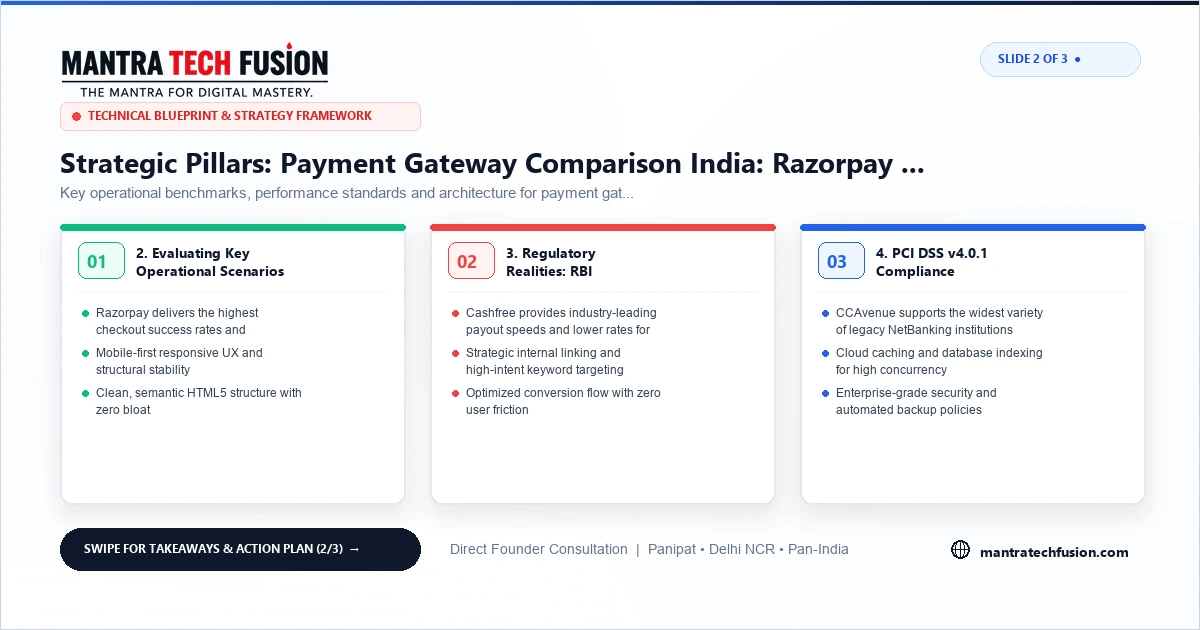
3. Regulatory Realities: RBI E-Mandates & Tokenization
Regardless of provider, any Indian website supporting card payments or recurring subscriptions operates under Reserve Bank of India (RBI) mandates:
- Card-on-File Tokenization (CoFT): Merchants cannot store actual 16-digit credit or debit card numbers on their servers. Gateways replace card credentials with secure tokens issued by card networks (Visa, Mastercard, RuPay), reducing the risk of server data breaches.
- E-Mandate Framework for Subscriptions: Recurring billing on cards or UPI AutoPay requires a registration step with Multi-Factor Authentication (AFA). Furthermore, merchants must trigger an automated pre-debit notification (via SMS or email) at least 24 hours prior to debiting funds, allowing customers the statutory option to pause or cancel the mandate.
4. PCI DSS v4.0.1 Compliance Responsibilities
A frequent misconception among business owners is that using an embedded iframe or hosted redirect eliminates all PCI DSS obligations. Under PCI DSS v4.0.1 (effective April 2025):
- The Merchant's Security Scope: While merchants using hosted modals typically qualify for simplified compliance questionnaires (such as SAQ A), the parent web page hosting the checkout script remains within compliance scope.
- Script Integrity Governance (Requirement 6.4.3 & 11.6.1): Merchants must ensure that all third-party JavaScript running on the checkout page (analytics tags, tag managers, chat widgets) is authorized and monitored against tampering to prevent client-side "e-skimming" attacks.
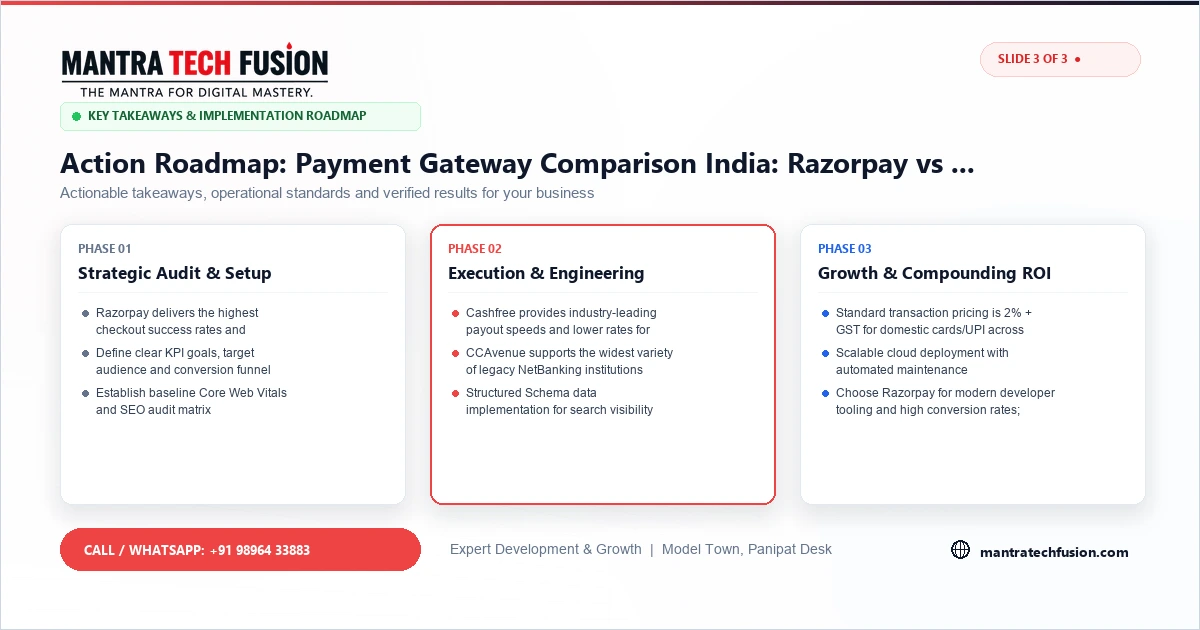
Interactive 3-Slide Article Visual Guide
5. Architectural Recommendations
- Implement Resilient Webhook Handlers: Never rely solely on front-end browser redirects to confirm payment success. Network disconnections or closed mobile browser tabs can interrupt the return redirect. Always confirm orders asynchronously via cryptographically signed server webhooks.
- Plan for Redundancy: Enterprise platforms with high transactional velocity frequently maintain integration hooks for a secondary gateway, allowing traffic to be routed dynamically if an acquiring banking partner experiences temporary downtime.
6. Webhook Idempotency and Payment Reconciliation
One of the most frequent architectural vulnerabilities in custom checkout systems is improper webhook handling. In high-traffic environments, payment aggregators retry webhook events automatically if your server does not return an immediate HTTP 200 OK status within strict timeout thresholds (often 5 to 10 seconds):
- Enforce Webhook Idempotency: Because network retries mean your server may receive the exact same
payment.capturedevent multiple times, your webhook receiver must verify whether the transaction ID has already been marked as fulfilled in your database before executing order creation routines. - Cryptographic Signature Verification: Never trust raw JSON payload bodies without verifying the provider's cryptographic signature header (such as Razorpay's
X-Razorpay-SignatureHMAC SHA256 header) using your secret webhook key. - Automated Daily Reconciliation: Implement automated end-of-day reconciliation scripts that query the gateway's settlement API to detect discrepancies between captured website orders and actual settled merchant payouts.
To inspect secure checkout development and backend API architectures, explore our custom web development services and examine our foundational solutions in e-commerce website development. For additional insights on platform selection, read our comparative guide on Shopify versus WooCommerce for Indian sellers.