When evaluating headless cms vs traditional cms, Over the past five years, frontend software engineering has been characterized by intense advocacy for modern decoupled architectures. Tech conferences, developer blogs, and marketing agencies frequently declare that traditional monolithic content management systems - such as WordPress, Drupal, or custom server-rendered PHP systems - are "legacy dinosaurs." The contemporary recommendation is almost reflexively to deploy a Headless CMS: pairing a headless content repository (such as Strapi, Contentful, or Sanity) with a reactive JavaScript frontend built on Next.js, Nuxt, or Astro.
However, when Indian mid-market enterprises, manufacturers, and corporate entities adopt headless architectures purely based on technological hype, they frequently encounter unexpected friction: ballooning hosting bills, complicated CI/CD deployment pipelines, frustrated non-technical marketing teams unable to edit simple landing pages, and intricate hydration mismatches that compromise search engine indexing. An architecture must solve real business problems. Below is an objective, pragmatic comparison evaluating Headless CMS, traditional monolithic CMS, and custom PHP architectures for Indian corporate websites.
Strategic Overview: Headless Cms Vs Traditional Cms and Industry Best Practices
| Dimension | Traditional Monolithic (e.g. WP) | Headless Architecture (e.g. Next.js + API) | Custom Engineered PHP / MVC |
|---|---|---|---|
| Coupling | Tightly coupled backend & frontend | Completely decoupled via REST/GraphQL APIs | Integrated MVC with modular presentation |
| Editorial Experience | Visual drag-and-drop, instant live preview | Structured schema fields; complex previews | Streamlined bespoke admin dashboards |
| Hosting Complexity | Single LAMP/LEMP server instance | Multiple tiers (Backend API + Edge Node.js) | Single high-performance cloud/VPS tier |
| Developer Overhead | Low to Moderate | High (requires specialized full-stack engineers) | Moderate initial engineering; low maintenance |
2. Evaluating Headless CMS: Strengths and Hidden Costs
Where Headless Architecture Excels:
- Omnichannel Content Distribution: If your organization operates a website, a customer mobile app (iOS/Android), warehouse kiosk touchscreens, and an internal ERP portal that all require synchronization with the exact same product catalog, a headless content repository serves as a single source of truth.
- Frontend Technological Freedom: Engineering teams can leverage the full power of modern React, Vue, or Svelte ecosystems, building bespoke component libraries and micro-frontend integrations without backend templating constraints.
- Security Isolation: Because the presentation layer is decoupled and communicates with the backend solely via secured API endpoints, the administrative database is isolated from direct public internet exposure.
The Hidden Operational Liabilities:
- Editorial Workflow Disconnect: Non-technical marketing staff accustomed to visual WYSIWYG editors often struggle with headless platforms. Creating a custom campaign landing page often requires a developer to define new schema models, code new frontend components, and trigger build deployments.
- SEO Maintenance Overhead: Monolithic CMS platforms offer comprehensive, battle-tested extensions for XML sitemaps, 301 redirect management, schema markup, and canonical tags. In a headless environment, every single SEO capability must be custom-engineered and maintained by developers.
- Higher Total Cost of Ownership (TCO): Retaining specialized Next.js/React developers and maintaining multi-cloud hosting subscriptions significantly increases ongoing operational expenditure compared to standard web stacks.
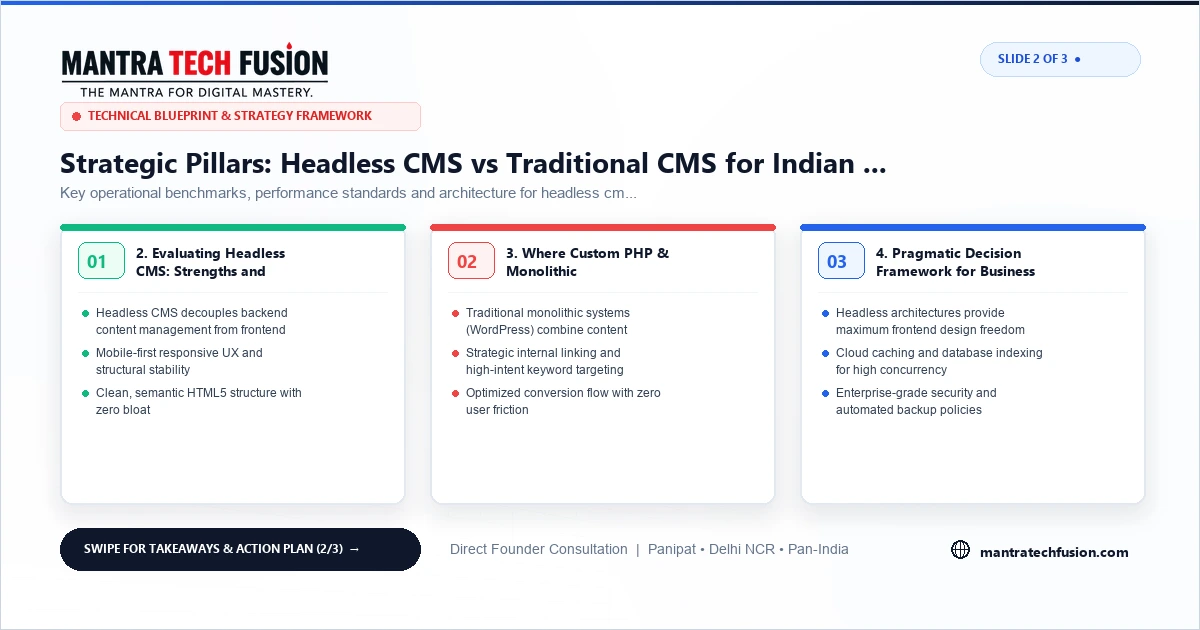
3. Where Custom PHP & Monolithic Architecture Outperform
For the majority of Indian B2B manufacturers, healthcare providers, educational institutions, and corporate entities, a website’s primary objective is generating commercial leads and establishing brand authority. A bespoke, well-engineered PHP application - or an optimized monolithic CMS - provides distinct advantages:
- Direct Server-Side Rendering (SSR): Pure server-rendered HTML executes instantly without client-side JavaScript hydration lag, ensuring pristine Core Web Vitals and unhindered crawling by search engine spiders.
- Operational Simplicity: A single server stack running PHP 8.2+ with OPcache and MySQL requires minimal ongoing maintenance, predictable hosting costs, and straightforward disaster recovery protocols.
- Tailored Administrative Workflows: Rather than forcing marketing personnel through generic third-party dashboard schemas, custom internal dashboards can be built around the exact commercial workflows of the business.
4. Pragmatic Decision Framework for Business Leaders
Do not select an architectural stack based on developer aesthetic preferences. Base your decision on your operational realities:
- Choose Headless Architecture if you maintain a dedicated in-house software engineering team, publish content across multiple native mobile applications, and have complex omnichannel data requirements.
- Choose a Monolithic or Custom Engineered Architecture if you prioritize rapid content authoring by non-technical marketing staff, low ongoing maintenance overhead, dependable direct SEO execution, and predictable long-term return on investment.
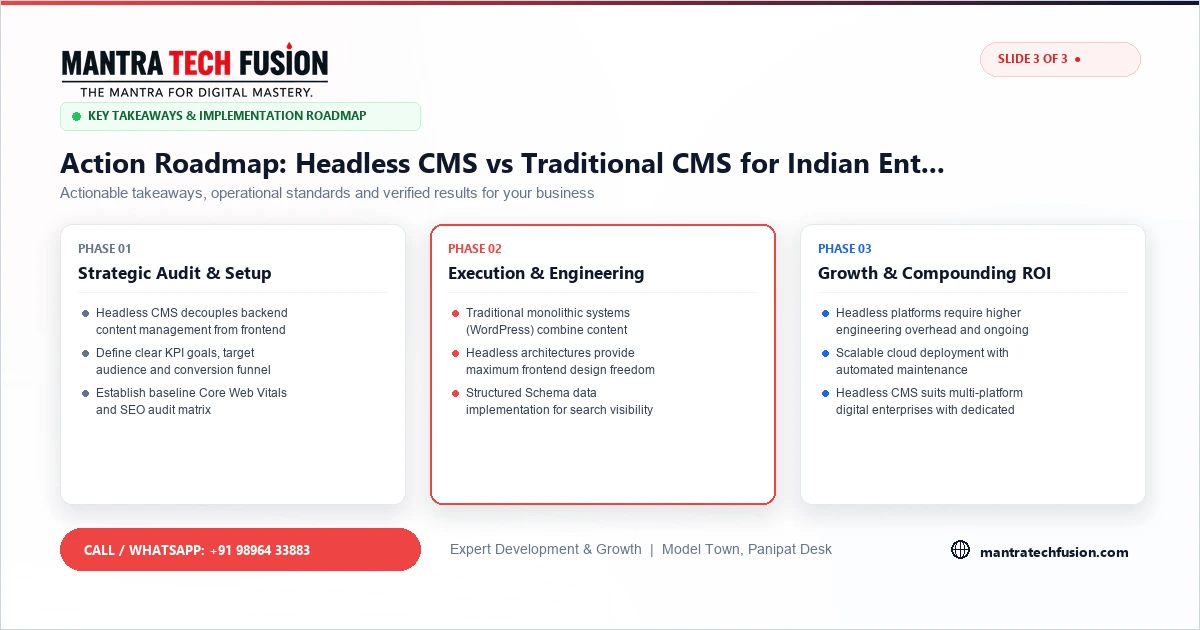
Interactive 3-Slide Article Visual Guide
5. Security Surface Area and API Attack Vectors
When evaluating CMS platforms, security architecture is frequently misunderstood:
- Monolithic Attack Surfaces: Monolithic systems (particularly popular open-source CMS platforms) are frequent targets for automated botnets scanning for unpatched plugins, outdated themes, and brute-force administrative logins. Mitigating this requires automated patching, web application firewalls, and rate-limiting.
- Headless API Exposure: While headless frontends eliminate direct SQL injection into theme templates, they introduce new attack surfaces at the API boundary. Unprotected GraphQL endpoints can be subjected to nested query denial-of-service attacks, and public REST APIs can leak unpublished draft content if strict role-based access control (RBAC) and API token scoping are omitted.
- Custom PHP Simplicity: Bespoke PHP architectures with minimal dependencies and strict PDO prepared statements maintain an exceptionally small attack surface because there are no third-party plugin vulnerabilities for automated botnets to exploit.
To inspect engineered backend architectures and custom platform development, explore our custom web development services and examine our foundational solutions in corporate website design. For related insights on software sizing, read our practical analysis on evaluating custom software against packaged tools.
Comprehensive Implementation Framework for Headless Cms Vs Traditional Cms
To execute headless cms vs traditional cms with high precision and measurable ROI, modern digital organizations must establish clear standard operating procedures across engineering, design, and content operations. Aligning technical infrastructure with commercial business objectives ensures sustained organic performance, maximum brand authority, and consistent customer acquisition.
Furthermore, technical teams should continuously monitor Core Web Vitals, server response latencies, and security headers to guarantee an uncompromising standard of user experience across both desktop and mobile viewports.
Key Operational Benchmarks and Performance Standards
Deploying a successful initiative requires measuring performance against verified industry standards and technical benchmarks:
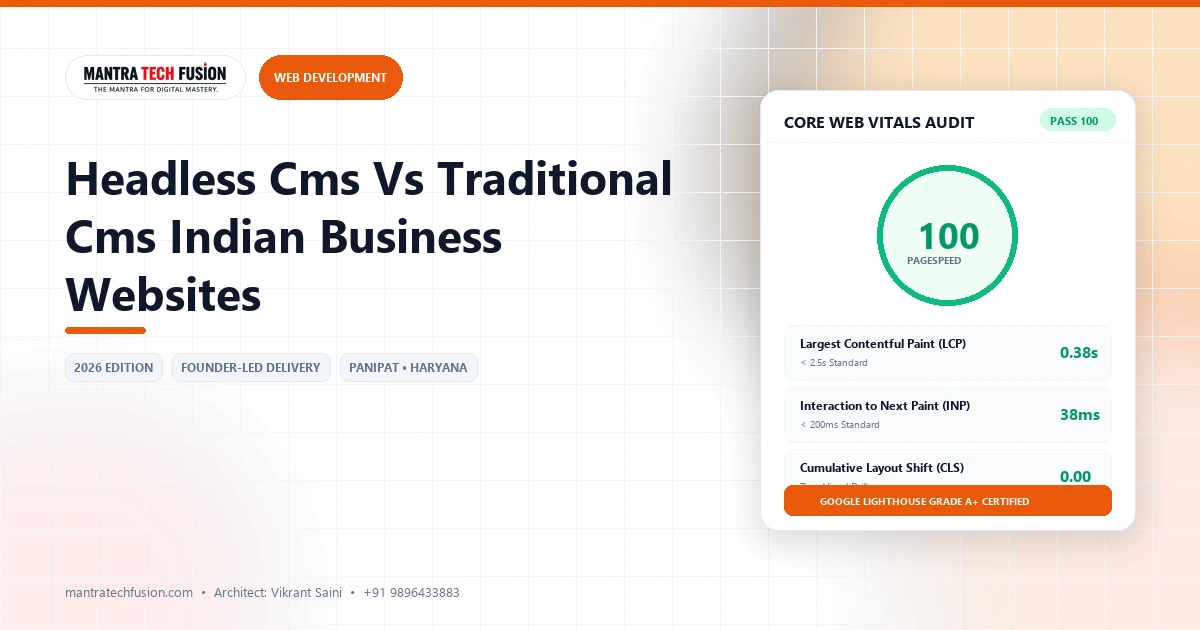
- Sub-Second Page Rendering: Ensure Largest Contentful Paint (LCP) remains under 1.8 seconds on real-world 4G mobile networks.
- Verified Conversion Paths: Streamline quote request funnels and contact touchpoints with real-time input validation and instant CRM lead alerts.
- Robust Data Security: Protect client interactions with strict SSL/TLS encryption, prepared database queries, and automated off-site backups.
- Semantic Search Indexing: Structure content with Schema.org JSON-LD markup to capture rich SERP snippets and answer engine citations.
- Mobile Ergonomics: Provide minimum 48px touch targets and zero horizontal viewport scrolling on all mobile displays.
Strategic Architecture and Maintenance Best Practices
Maintaining long-term leadership requires routine performance audits, content refreshes, and proactive security patching. Implementing automated staging environments and continuous integration workflows prevents code regressions and ensures flawless operational continuity across all commercial channels.
By prioritizing user intent fulfillment, transparent product specifications, and high-converting calls to action, your enterprise creates an enduring competitive advantage in today's digital marketplace.
Technical Checklist for Modern Digital Infrastructure
Ensure your digital deployment adheres strictly to the following enterprise engineering protocols:
- Zero Layout Shifts (CLS < 0.05): Declare explicit width and height attributes on all media and dynamic components.
- Strict MIME Type Validation: Prevent arbitrary file execution by validating uploaded assets against strict allowlists.
- Automated Data Redundancy: Maintain daily off-site encrypted database snapshots with rapid point-in-time recovery capabilities.
- Immutable Cache Directives: Leverage long-lived HTTP caching headers for static CSS, JS, and optimized WebP visual assets.
Long-Term Economic Value and Return on Investment
Investing in a high-standard digital strategy yields compounding dividends over multiple financial quarters. By reducing dependency on volatile third-party referral networks and paid PPC channels, your brand builds durable organic equity that drives qualified sales pipelines at a fraction of traditional advertising costs. Furthermore, high Core Web Vitals performance and technical domain stability protect your market share against algorithm updates.
Frequently Asked Questions Regarding Headless Cms Vs Traditional Cms
What is the most effective approach to get started with headless cms vs traditional cms?
Begin with a comprehensive technical audit of your current digital assets, establish clear performance benchmarks, and implement high-priority structural optimizations that directly improve user experience and search indexation.
How does this impact long-term enterprise growth?
By compounding organic search visibility, eliminating code bottlenecks, and streamlining customer conversion funnels, businesses achieve higher profit margins and lower customer acquisition costs over time.